Our 2026 sourcing notes: linen, traceability, water
How we pick mills, what OEKO-TEX actually covers, and the questions we ask before any new fabric SKU goes live in the catalog. An honest look at hospitality textile sustainability.
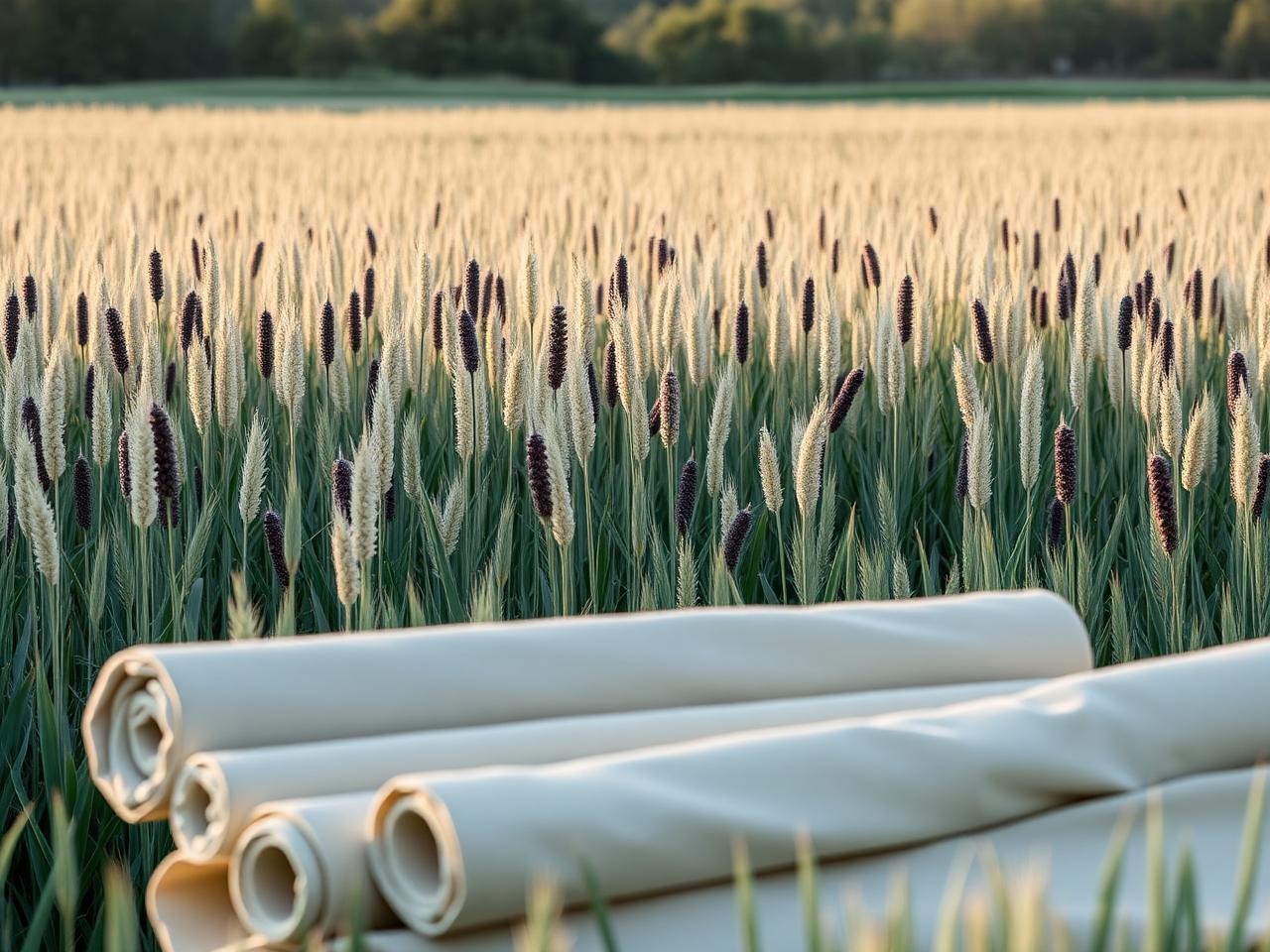
Sustainability in hospitality textiles is mostly marketing. We say this as a company that genuinely tries to do it well — the gap between what is claimed and what is verifiable is enormous, and the operators who buy from us deserve a clearer picture of what they're actually getting.
Here's how we source for 2026, why we make the choices we do, and what we don't yet have answers for.
Linen is good, but not automatically
Linen, made from flax, is one of the lower-impact natural fibers we can buy. Flax grows on land that doesn't support food crops easily, requires roughly one-tenth the water of cotton, and the entire plant is used (fiber, seed, oil, even the woody stem becomes particleboard).
But: most linen sold globally is grown in Western Europe and then shipped to Asia for spinning and weaving. The fiber is low-impact; the supply chain is not. We deliberately source from mills in Lithuania and Belgium that grow, scutch, spin, and weave on the same continent. We pay roughly 15% more per meter for this and we think it's worth it.
What OEKO-TEX actually means
OEKO-TEX Standard 100 is the most common textile certification you'll see referenced. It is good. It is also narrower than most people think.
OEKO-TEX 100 certifies that the finished fabric does not contain a list of specified harmful substances above defined thresholds. It does not certify how the fiber was grown, how workers in the supply chain were treated, the water consumption of the dye process, or the carbon footprint of the finished product.
We require OEKO-TEX 100 on every fabric in our catalog. We treat it as a floor, not a ceiling.
The water question
Dyeing is the highest-water-consumption step in textile production by a wide margin. A conventional reactive-dye cotton process can use 100+ liters of water per kilogram of fabric. Modern low-water dye processes can reduce that by 60–80%.
We're slowly migrating our dyed SKUs to mills using low-water cold-pad-batch dyeing. As of 2026, roughly 40% of our dyed catalog is from low-water mills. We expect to be at 70% by end of 2027. Anyone who tells you they're at 100% today is probably not telling the truth, or is buying very little dyed fabric.
What we ask before adding a new SKU
- Name and country of the mill of origin
- Current OEKO-TEX 100 certification (renewable annually)
- Dye process description (reactive, cold-pad-batch, sulphur, etc.)
- Water consumption per kg of finished fabric, if measured
- Whether the mill is a member of the Sustainable Apparel Coalition or has equivalent third-party social-audit data
- Sample for accelerated wash testing and color-fastness testing in our own facility
We say no to fabrics that look beautiful when we can't get clear answers on those questions. We have walked away from suppliers offering 25% lower prices because they could not document mill of origin.
What we don't yet have answers for
Cotton is harder than linen. Even certified organic cotton has a meaningful water footprint, and supply-chain transparency for cotton is genuinely difficult. We currently buy half-linen blends rather than pure cotton on our highest-volume SKUs partly for this reason.
Synthetic fibers — the poly-blends we offer for laundry-service operators — have lower water and energy footprints in production but contribute to microplastic shed in industrial washing. We're watching ongoing research on filterable wash bags and treating it as an open question.
Anyone who claims to have a complete answer here is either selling something or hasn't looked hard enough. The honest position is: we do better than most, we know exactly where we still fall short, and we're improving year-over-year.
If you have questions about a specific fabric in our catalog, email manage@sburq.com. We'll send you the mill name, the certifications on file, and whatever third-party data we have.